Where the needle meets the cursor.
Not a feed. Not a grid. A gallery built around your work — and no one else's.
Every artist gets a gallery of their own. Not a template with your photos dropped in — a space designed from nothing, around your work, your style, your world. No two are ever the same, because no two tattoos are.
You don't scroll a feed. You walk through it.
Picture a gallery in the dark. You move through it and a pool of light travels with you — each piece lights as you reach it, then falls back into shadow as you pass. One work at a time, in its own light, at the size it was shot. When a piece stops you, you reach out — it lifts off the wall, turns, and you see it up close, the linework and the shading at a resolution Instagram will never show. Then it settles back, and you move to the next.
A whole theatre. A whole experience. The kind of thing a twelve-hour piece deserves.
This is THE HALL — a dark cathedral gallery, the first of nine. Others are being drawn now: some built for a single monumental back piece, some for a large body of flash, some for a run of pieces that belong together. Every artist's is different — a different theme, a different feel. Yours is shaped after I've seen your work, never before.
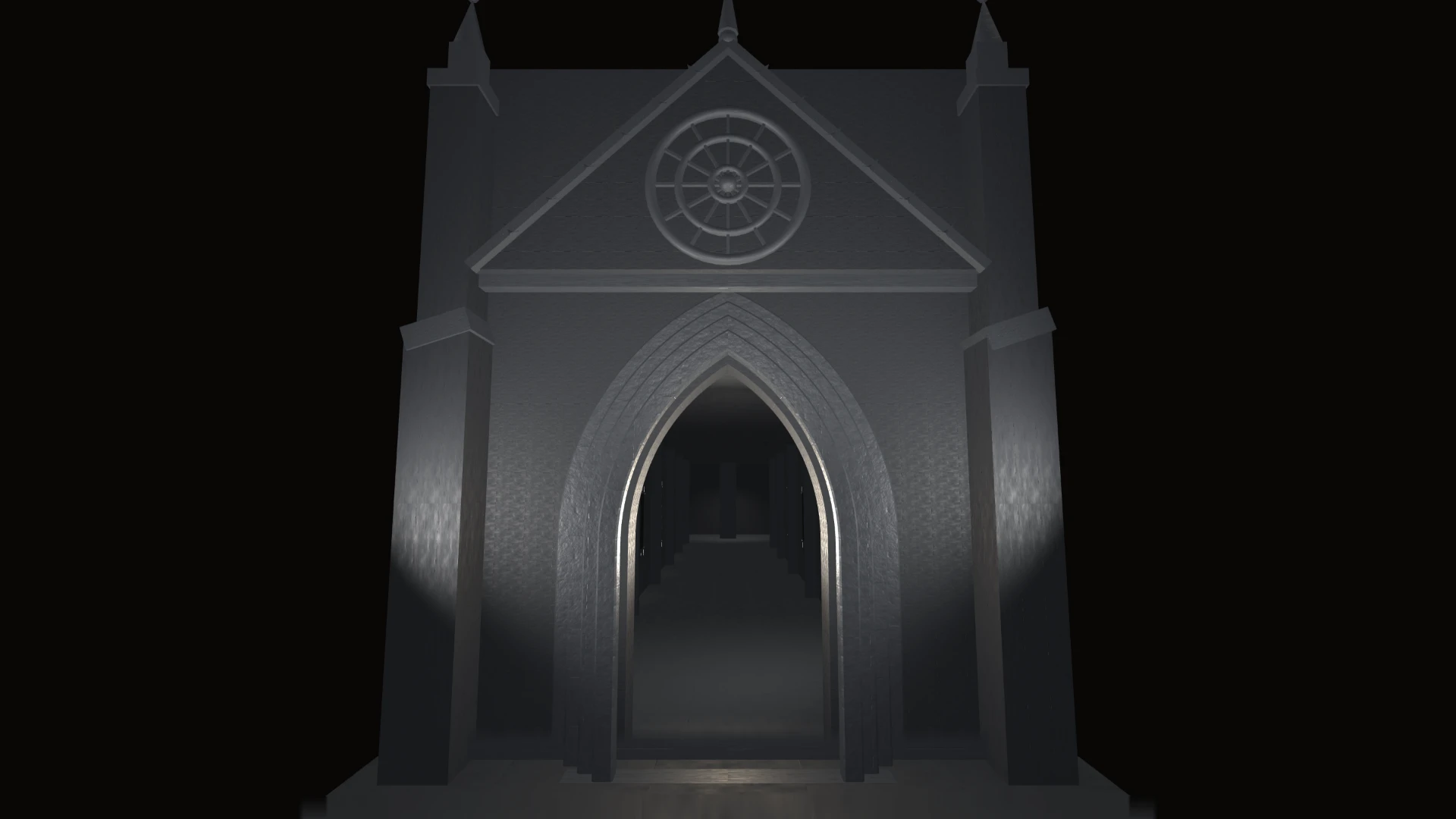
COMING SOONWalk the interactive galleryThe gallery fills one artist at a time. Each piece is chosen, hung, and credited to the artist who made it.
A handful of places are open now. When yours is built, it's yours — on your own site, at full resolution, nobody else's work beside it.
Reserve your place →You've just seen where the work could live. Here is where it lives now.
You know the part at the end.
The piece is finished, the client is tired and wants to go, and you're still there with your phone. Turn your arm. Come to the light. One more.
Twenty minutes photographing nine hours of work. That isn't vanity. Once it heals, the tattoo belongs to them. The photograph is the only part of it you keep.
Then you upload it.
Instagram takes that file, compresses it, crops it square, drops it to eleven hundred pixels and puts it under an advert for something else. By Thursday it's buried. Nobody scrolling past it has any idea how long it took.
And it will change again. It always does. Facebook was a different thing ten years ago. Instagram was photographs until it decided it wanted video, and everybody who had built on photographs watched their reach collapse without ever being told why. Nobody asked them. Nobody will next time either.
None of it is yours. Not the account, not the audience, not the archive. One report from a competitor, one hacked password, one policy change, and eight years of work becomes a login that doesn't open.
You're not careless. Nobody ever offered you anywhere else to put it.
Here's the alternative.
Every piece you have ever made, in one place, at the size it was shot. Not a feed. Not a grid of thumbnails. Not four hundred photographs buried on a phone you'll replace next year.
Fifteen years of work, in order, presented the way the work deserves, on a page with your name on the door.
Yours. All of it. Nobody can crop it, bury it, or take it away.
INDELEBLE
adj. Que no se puede borrar.
adj. That cannot be erased.
It's how you get work. It's how people find you, how they message you, how the diary fills. Nothing here replaces that, and anyone telling you otherwise has never had to fill a week. This isn't instead of your feed. It's the thing your feed has never been able to be.
Painters have galleries. Photographers have books. Sculptors have rooms with the lighting set for them. You have a feed — where your work appears at eight hundred pixels wide, for four hours, between a meme and someone's lunch, in a layout you didn't choose. You're the only art form that accepted that.
On Instagram your work sits in their layout, in their order, beside their ads, between a meme and someone's lunch. You never chose any of it. A website is the only place your work is presented the way you would present it — your order, your story, nothing else on the page.
Less than you'll spend on ink and cartridges this year. That one lasts fifty years. This one lasts as long as you want it to.
None of this is quick. That is the point.
I build software. My platform reads a business completely — every review, every account, every score, every piece of work it has ever put out — and works out what it should look like, down to the colour.
I point it at yours. Nothing here starts from a template. It starts from what you have actually made.
I chose this industry on purpose. I am a tattoo fan, and I would rather work with artists than with anyone else.
There is a reason I take it seriously. I have spent years working in a medium where everything can be undone. Every line I draw, I can delete. Every mistake, gone in a keystroke.
You do not have that. You get one attempt, on skin, and it stays for fifty years.
At the top of this page there is a tattoo machine that becomes a mouse. Same shape, same grip, same single point of contact. One of them has an undo. That is the whole difference between us, and it is why I would rather build for you than for anyone else.
I consider myself an electronic artist. You are a physical one. This is what happens when the two meet.
No templates. No generic WordPress. Every layer placed on purpose — same as your work.
Before a line is written, your work and your studio get studied.
The palette comes from your ink and your space, not an off-the-shelf theme.
Type chosen for your style — fine blackwork doesn't get the same face as full-colour neo-traditional.
Every component — the cards, the edges, the buttons, the spacing — drawn for you.
Your trade, your city and your competition researched before anything is built.
A story developed: where you came from, how you work, why people choose you. The site tells it from top to bottom.
That's the thing Instagram can never do. There, you're a grid of photos in the same format as everybody else.
It all lives on your domain. None of it depends on a platform you don't control.
Your contact list: emails and WhatsApp numbers, captured from day one, in a private section of your own site.
Your original photos, uncompressed — not the chewed-up copy Instagram keeps.
Client records: what you did, when, with what, and how to reach them again.
Consent forms signed online and filed. No more folder of paper.
One button to download all of it, in formats anything can open. Without asking, without telling me, no conditions.
Your Instagram archive rescued: eight years of posts, dates intact, brought onto your own domain. I do it with you — it's four taps on your phone.
The site works while you tattoo.
Bookings taken on the site, with a deposit, so the chair doesn't sit empty.
A waiting list: when someone drops out on Thursday, one tap tells everyone waiting for a slot.
Everyone you tattoo gets their own link — their piece, the date, your name, the aftercare.
Healed photos requested automatically at six weeks — the best proof of your work.
A work registry: every piece stamped with a date and your name. If someone posts it as theirs, you have the record.
None of it matters if nobody arrives.
Written so Google finds you by style, by city and by piece.
And so the AI search tools find you — where a lot of your clients already look, and where almost no studio appears yet.
Fast on a phone, because that's where they look at you. No exceptions.
In Spanish and English if you work with travellers.
Whichever one you're proudest of. WhatsApp or Instagram.
No obligation. You see your piece hung, at full resolution, and look at it up close.
Your work, your story, your palette. Nothing copied from another studio.
Domain in your name. Permanently.
Nobody walks into a shop and asks for whoever's free. You chose a hand. An agency puts five people between you and the work — one who sells it, one who plans it, one who draws it, one who builds it — and not one of them has looked at your portfolio. Here the person who reads your work is the person who draws it and the person who builds it. It never gets handed on.
Every site is drawn from nothing, around your work.
Artists and studios. Not franchises.
I look at your portfolio before I say yes. I don't take everything.
You'll be talking to the person who builds it.